
Cultural & Coffee Tourism in Costa Rica: A Guide for Travel Agents
Beyond the rainforests and beaches, Costa Rica offers a rich cultural tapestry that sophisticated travellers are increasingly seeking out. Coffee heritage, indigenous communities, and authentic Tico traditions form a compelling niche that agents can use to differentiate their Costa Rica programmes from the mainstream.
The Coffee Story: A World-Class Selling Point
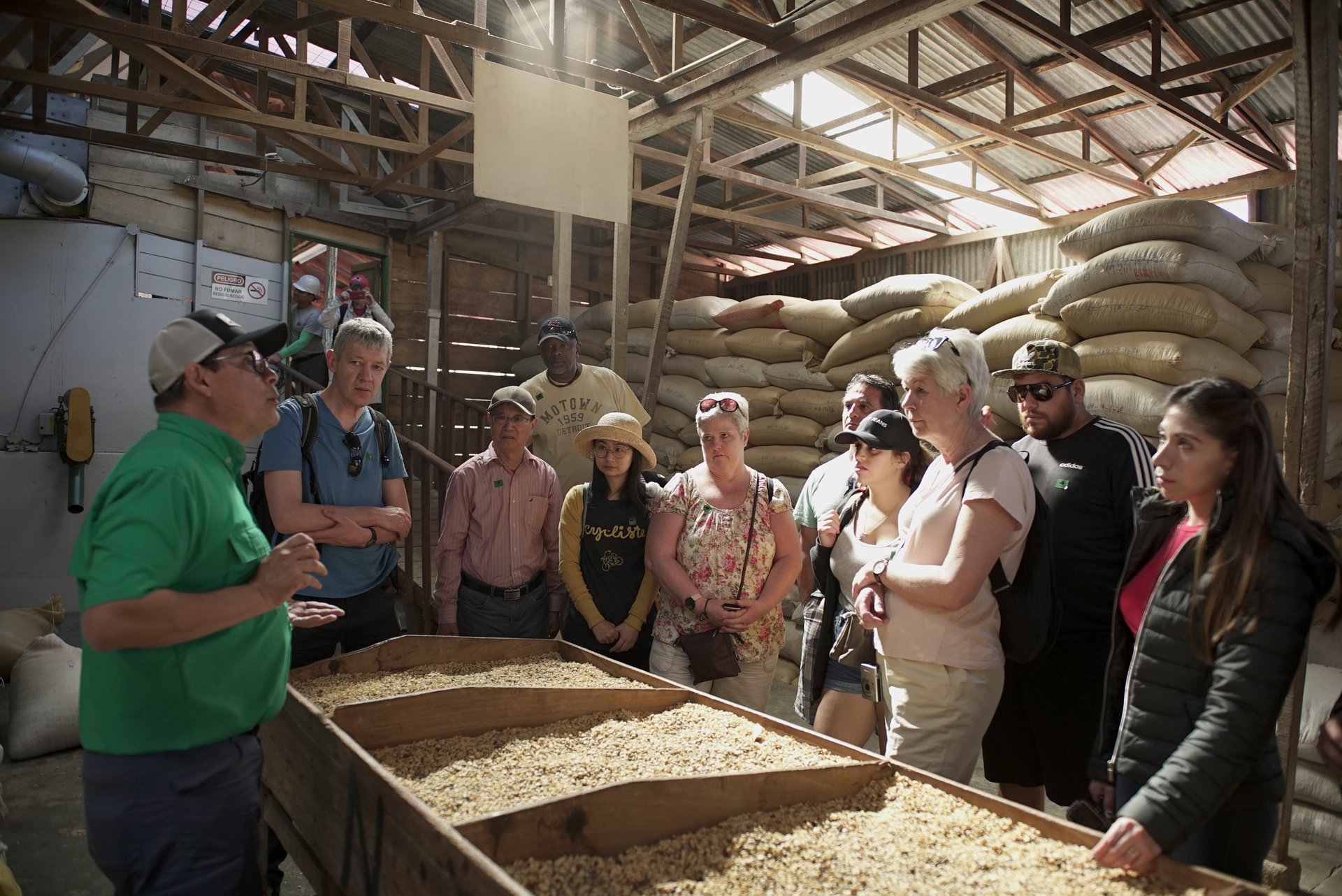
Costa Rica was one of the first countries in the world to dedicate itself exclusively to arabica coffee production — a standard enshrined in national law. The result is a coffee culture of extraordinary depth and quality, with distinct micro-regions each producing beans with characteristic flavour profiles. For culturally curious travellers, this is a genuinely compelling story that few other destinations can tell.
The Tarrazú region, situated in the Chiripó mountain range at elevations above 1,500 metres, is Costa Rica’s most celebrated coffee-growing zone. Tarrazú beans are prized by specialty roasters worldwide for their brightness, complexity, and clean finish. A guided visit to a working Tarrazú farm during harvest season (November through February) allows clients to follow the bean from tree to cup — picking ripe cherries, observing the wet-milling process, and tasting fresh-roasted coffee on site.
The Valle Central and Naranjo regions offer equally engaging experiences, with several farms now operating dedicated agrotourism programmes. Café Britt’s facility near Heredia has evolved into one of the country’s most visited cultural attractions, combining theatrical coffee-story presentations with cupping sessions and behind-the-scenes production tours. It is well-suited to clients who prefer a polished, interpretive experience over a purely agricultural one.
San José: More Than a Transit Hub
Most itineraries treat San José as an arrival/departure necessity rather than a destination in its own right. This is a missed opportunity. The capital has undergone significant cultural investment in recent years, and agents who include a purposeful San José day or overnight will find clients pleasantly surprised.
The Barrio Escalante neighbourhood has become Costa Rica’s culinary epicentre, with a concentration of restaurants, specialty coffee bars, and artisan food producers that rivals any Latin American capital. The Mercado Central — a working market dating from 1880 — offers an unscripted window into daily Tico life. The National Museum, housed in a former military fortress whose walls still bear bullet scars from the 1948 civil war that abolished the country’s army, tells Costa Rica’s history with clarity and pride.
For agent proposals, positioning one to two nights in San José at the beginning of a trip — rather than a rushed transfer — allows for proper acclimatisation, a city food tour, and a coffee experience before heading to more remote destinations. The Fleur de Lys and Grano de Oro boutique hotels are the longstanding favourites for culturally oriented travellers who want character over chain.
Indigenous Communities: Respectful, Meaningful Encounters
Costa Rica is home to eight recognised indigenous groups, and a small but growing number of community-led tourism initiatives offer travellers respectful, economically beneficial encounters with their cultures and traditions.
The Boruca of the southern Pacific zone are renowned for their balsa-wood mask-making tradition, rooted in a ceremonial festival (Juego de los Diablitos) that re-enacts the community’s resistance to Spanish conquest. Artisan cooperatives sell directly to visitors, and guided visits can be arranged to workshops where the carving and painting process is demonstrated. This is particularly well-suited to clients with an interest in folk art and craft.
The Maleku of the northern lowlands maintain one of the most accessible community tourism programmes, with guided visits to a traditional settlement near La Fortuna. Presentations cover language, cosmology, traditional medicine, and the community’s relationship with the surrounding wetland ecosystem. Given its proximity to Arenal Volcano, this integrates naturally into a standard northern itinerary.
Agents should note that indigenous tourism in Costa Rica is intentionally small-scale and community-controlled. Group sizes are typically limited, advance booking is essential, and the experience is designed for genuine cultural exchange rather than performance. This makes it most suitable for curious, respectful travellers rather than those seeking a tick-box activity.
Cartago and the Orosi Valley: Colonial Heritage
Costa Rica’s original colonial capital, Cartago, sits at the foot of the Irazú Volcano and rewards a half-day visit for historically minded clients. The Basílica de Nuestra Señora de los Ángeles — Costa Rica’s most important religious site — is a striking structure housing La Negrita, a small stone figure of the Virgin Mary that is the focus of an annual pilgrimage drawing hundreds of thousands of devotees each August.
The nearby Orosi Valley is one of Costa Rica’s most scenic and historically layered landscapes: colonial churches, coffee plantations, thermal pools, and cloud forest reserves compressed into a single half-day loop from Cartago. The Lankester Botanical Gardens, operated by the University of Costa Rica, are among the finest orchid collections in the Americas — an outstanding stop for botanically inclined clients.
Building a Cultural Itinerary
Cultural and coffee itineraries work best when they avoid trying to cover too much ground too quickly. A well-paced 8-night programme might include two nights in San José (food tour, market visit, city history), two nights in Tarrazú or Naranjo (coffee farm immersion), two nights near La Fortuna (Maleku community visit, volcano, hot springs), and two nights on the southern Pacific coast (Boruca artisans, Osa Peninsula ecology). This creates a narrative arc — urban, agricultural, indigenous, natural — that gives the trip genuine depth.
CRS Tours has established partnerships with the coffee estates, cultural guides, and community organisations that make these experiences happen. We handle the logistics so agents can promise their clients something genuinely different — and genuinely Costa Rican.