Author: Jan Centen

Luxury Travel in Costa Rica: Positioning the Destination for Premium Clients

Costa Rica has quietly built one of the most compelling luxury travel propositions in the Western Hemisphere. Far from the beach resort model that dominates Caribbean luxury, Costa Rica offers something increasingly rare: genuine wilderness, delivered at the highest standard of service. For agents with high-net-worth clients seeking something beyond the standard five-star circuit, here is how to position the destination — and what to deliver.

The Luxury Case for Costa Rica
Costa Rica

The conventional objection from agents new to this segment is that Costa Rica lacks the brand recognition of Maldives, Tuscany, or the Amalfi Coast for luxury travellers. In practice, this is increasingly irrelevant — and in many cases, an advantage. Clients who have done the obvious luxury destinations are actively seeking new experiential territory. Costa Rica’s combination of intact tropical ecosystems, internationally acclaimed spa and wellness properties, and a mature hospitality infrastructure delivers an experience that neither Africa (too long a flight) nor Southeast Asia (too far removed culturally) can replicate for American and European clients.

The commercial argument for agents is equally strong. Luxury Costa Rica itineraries carry higher margins than mass-market bookings, the segment is growing consistently, and clients who experience the destination well tend to return — often with friends or family in tow.

The Top Luxury Properties

Nayara Springs, situated in the Arenal Volcano corridor, has achieved global recognition as one of the finest boutique luxury properties in Latin America, consistently appearing on Condé Nast Traveler and Travel + Leisure top-hotel lists. Its 35 private villas each feature a plunge pool fed by natural thermal water, set within forest that teems with wildlife. The property’s sister hotel, Nayara Tented Camp, takes the concept further — each villa suspended above the forest floor on stilts, with butler service and a private guide available throughout. This is the flagship property for agents building ultra-high-end proposals.

Hacienda AltaGracia (Auberge Resorts Collection) on the Osa Peninsula is positioned as Costa Rica’s most transformative luxury experience. Set on 350 acres of rainforest, cattle pasture, and working coffee plantation, it integrates equestrian therapy, plant-based wellness programmes, and one of the most sophisticated spa facilities in Central America. Access by charter flight from San José to Puerto Jiménez reinforces the sense of genuine remoteness. This is the right property for clients who have done Nayara and want to go deeper.

Four Seasons Resort Costa Rica at Peninsula Papagayo is the anchor property for luxury Guanacaste itineraries. With two championship golf courses, a world-class marina, and the beachfront infrastructure that luxury travellers expect, it offers a more conventional high-end resort experience within an extraordinary Pacific landscape. It is the strongest option for clients combining luxury leisure with family travel, given its exceptional children’s programming alongside adult-focused amenities.

Andaz Costa Rica Resort at Peninsula Papagayo (Hyatt) occupies a stunning headland position between two private beaches and operates at a slightly more contemporary, design-forward aesthetic than its Four Seasons neighbour — making it attractive to younger luxury travellers and those seeking a less formal environment.

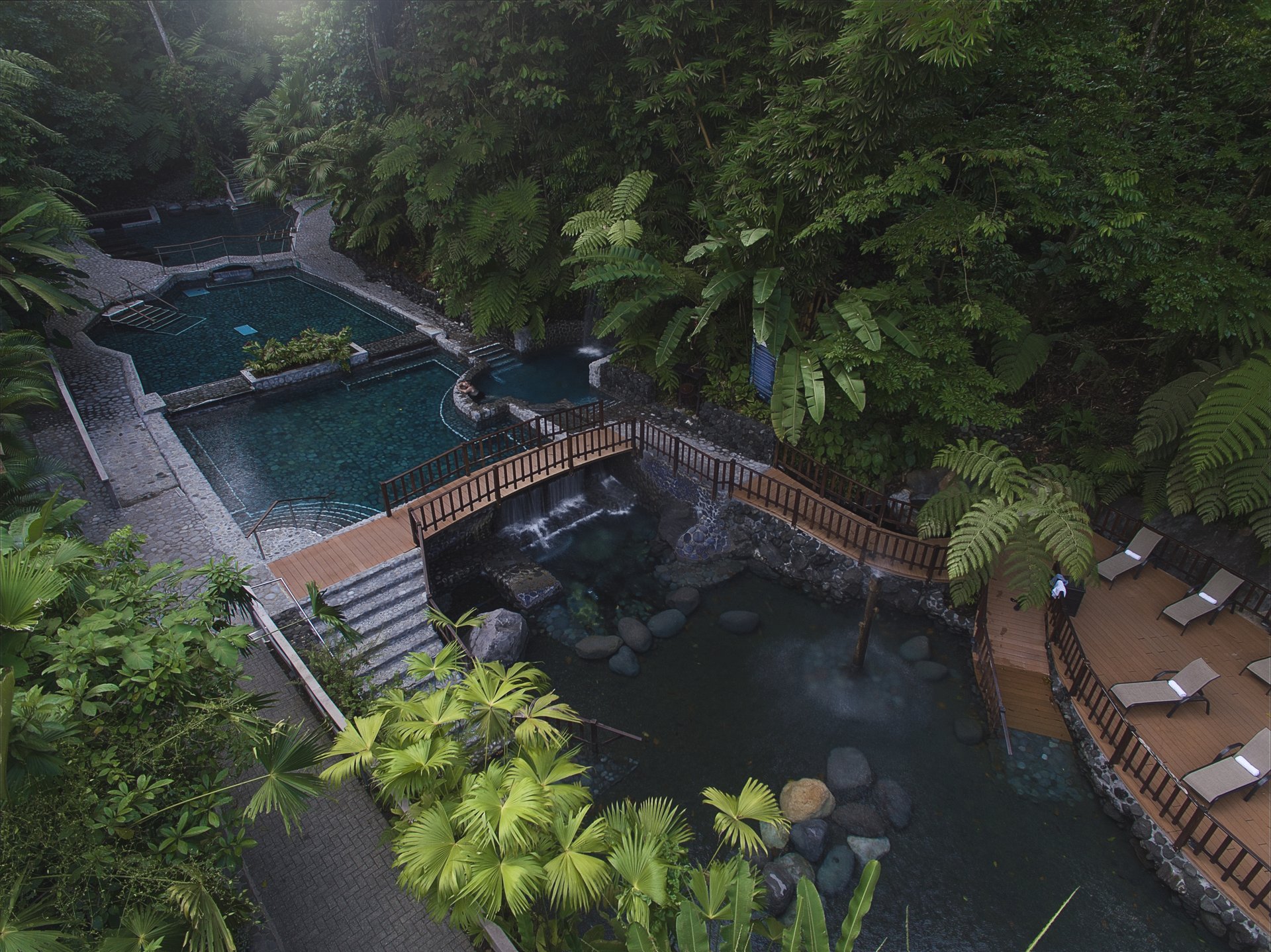
Tabacón Thermal Resort & Spa near Arenal offers a unique thermal hot spring experience within a luxury hotel framework. The property sits on the slopes of Arenal Volcano, and its gardens — crisscrossed by natural hot spring rivers — are arguably the most dramatic spa setting in the Americas. For spa-focused luxury clients, this is a non-negotiable property to know.

Exclusive Experiences: What Sets a Luxury Itinerary Apart

The standard excursion menu — zip-lining, river rafting, national park visits — is appropriate for the mid-range market. Luxury clients need experiences that feel curated, private, and access-controlled. The following consistently deliver at that level.

Private naturalist guides transform every wildlife encounter. A skilled private guide — with night-vision equipment, a spotting scope, and decades of field experience — will find species that group tours miss entirely. For clients staying at properties like Nayara or Hacienda AltaGracia, a resident naturalist is typically included; for clients moving between properties, CRS Tours can arrange continuity with a single dedicated guide throughout the trip.

Charter flights between regions eliminate the discomfort of long road transfers and add a theatrical dimension to the journey — aerial views over Corcovado’s unbroken forest canopy, or the Pacific coast’s scalloped bays, are themselves experiential highlights. Charter flights are cost-effective when divided across a couple or small group, and significantly enhance the overall quality of the trip.

Private yacht and catamaran charters from the Papagayo Peninsula open up a coastline that is unreachable by road — isolated coves, sea turtle nesting beaches, and offshore snorkelling sites accessible only to those with the right vessel. Full-day and multi-day charters with a private crew, chef, and naturalist are available and bookable through CRS Tours.

Research station access at Corcovado and Tortuguero — where clients accompany marine biologists on sea turtle nesting surveys or assist ornithologists with bird-banding programmes — represents the outer edge of experiential luxury and appeals strongly to educated, intellectually curious travellers who have moved beyond passive sightseeing.

Handling Common Objections

Some luxury clients initially resist Costa Rica because they perceive it as an eco-tourism destination rather than a luxury one. The most effective counter is specificity: describe Nayara Springs’ private thermal plunge pool, not the national park two hours away. Describe the private catamaran at Papagayo, not the zip-line. Lead with the experience the client is buying, not the category the destination sits in.

Questions about road quality and transfer comfort are legitimate. Roads in Costa Rica, particularly to remote properties like Hacienda AltaGracia, can be challenging. The answer is charter flights: position them not as a compromise but as an integral part of the experience, and they become a highlight rather than a logistics problem.

CRS Tours in the Luxury Market

Our team has direct relationships with the general managers and reservations directors at Costa Rica’s leading luxury properties, enabling us to access availability that is not always publicly bookable, negotiate preferred rates for loyal agent partners, and arrange personalised touches that transform a good trip into an exceptional one. We accompany our DMC expertise with a thorough knowledge of luxury traveller expectations — because in this segment, the details are everything.

Contact us to discuss your high-end Costa Rica pipeline. We are happy to provide a detailed property comparison, rate overview, or full bespoke itinerary proposal for any client brief.

Family Travel in Costa Rica: The Agent’s Complete Booking Guide

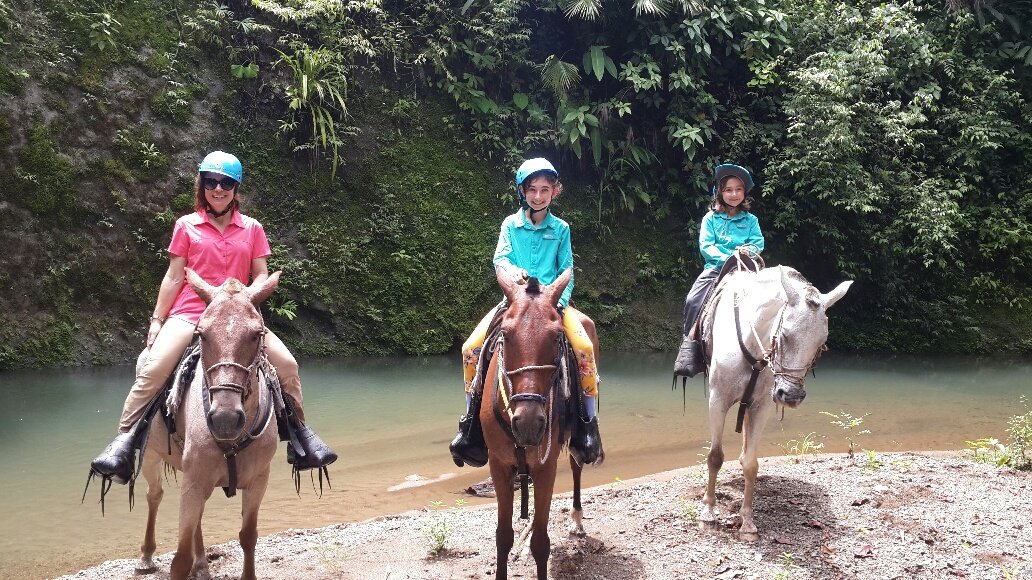
Costa Rica is one of the world’s most rewarding family destinations — but getting the details right matters. Mismatched accommodation, exhausting transfers, or age-inappropriate activities can undermine an otherwise beautiful itinerary. Here is what travel agents need to know about destinations, properties, activities, and pacing to deliver a seamless family trip that generates referrals.

Why Costa Rica Works for Families

Costa Rica

Few countries match Costa Rica’s ability to engage children of all ages. The country’s extraordinary wildlife — sloths, toucans, howler monkeys, sea turtles — creates a sense of wonder that no theme park can replicate. Activities are genuinely participatory: children do not watch wildlife, they encounter it. They do not observe coffee production, they pick the beans. The country’s compact geography also means that multiple ecosystems — rainforest, volcano, beach — are accessible within a single week, preventing the itinerary fatigue that can affect longer, single-environment trips.

For agents, family travel to Costa Rica also represents a commercially strong segment. Family groups book larger rooms or multiple units, add more excursions, and often upgrade accommodation to ensure children’s comfort. A well-executed family trip generates loyalty and referrals that extend well beyond the individual booking.

Best Destinations for Families

Arenal Volcano & La Fortuna is consistently the top-performing family destination in Costa Rica. The combination of a visually dramatic active volcano, accessible wildlife, white-water rafting, zip-lining, chocolate farm tours, and natural hot springs creates an itinerary that satisfies every age group simultaneously. The infrastructure around La Fortuna is well developed, transfers are straightforward, and accommodation ranges from family suites at Nayara Hotels to self-contained villas ideal for larger groups.

Manuel Antonio on the central Pacific coast is the other anchor family destination. The national park — one of the world’s smallest, one of the world’s most biodiverse — is genuinely accessible to children, with well-maintained trails, white-sand beaches within the park boundary, and a concentration of wildlife including white-faced capuchin monkeys, sloths, and iguanas that virtually guarantees sightings on any visit. The town of Quepos offers a wider range of accommodation options than more remote destinations, and the proximity to the airport at Quepos reduces transfer times from San José.

Tortuguero National Park, accessible only by boat or small aircraft, offers an experience unlike any other. Canoe tours through jungle canals at dawn, extraordinary bird life, and — in season (July through October) — the extraordinary spectacle of green sea turtles nesting on the beach create memories that children carry for life. The remoteness makes it slightly more demanding logistically, but for adventurous families with children aged 8 and above, it is outstanding.

Guanacaste, with its Pacific beaches and established resort infrastructure, is the right choice for families seeking more beach time alongside wildlife encounters. The Four Seasons Resort at Peninsula Papagayo operates one of the best kids’ clubs in the region, and the dry Pacific climate (December through April) guarantees reliable beach weather.

Accommodation: What Matters for Families

Interconnecting rooms, family suites, or private villas are strongly preferable to standard double rooms. Establish early in the booking process whether the family wants one shared space or separate rooms for parents and children — different families have very different expectations on this point.

Lodge-style properties with open-air common areas, wildlife feeders, and gardens that children can freely explore during free time are often more successful than resort-style hotels with a poolside focus. El Silencio Lodge in the Bajos del Toro cloud forest, Tulemar Bungalows in Manuel Antonio, and Leaves & Lizards Arenal Volcano Cabin Retreat are all exemplars of properties where the environment itself entertains children throughout the day.

Swimming pools remain important, particularly for evenings and rest days. Most lodge-style properties have them, but it is worth confirming pool size and depth for families with young children.

Activities by Age Group

For children aged 4–7, the best experiences are short (under two hours), sensory, and guided by specialists who understand young attention spans. Chocolate farm visits, butterfly gardens, frog ponds, and sloth sanctuary tours fit this profile well. Wildlife walks with a skilled naturalist guide — who knows how to keep small children engaged and quiet at the right moments — are reliably successful.

Children aged 8–12 can access a much wider range of Costa Rica’s signature experiences. White-water rafting on the Río Sarapiquí (Class II–III), beginner surf lessons in Manuel Antonio or Tamarindo, zip-lining at mid-length platforms, and kayaking in calm estuaries are all appropriate and typically unforgettable.

Teenagers respond best to more immersive, physically engaging experiences: challenging zip-line circuits, introductory surfing at consistent beach breaks, overnight camping in a national park, and snorkelling or diving off the Pacific coast. Many teenagers who are initially unenthusiastic about a family Costa Rica trip become its most passionate advocates by day three.

Pacing: The Most Common Booking Mistake

Agents consistently underestimate how much transfer time affects family trips in Costa Rica. A move that takes two hours without stops can become three-and-a-half hours with a family, and arriving at a lodge after dark eliminates the first evening’s wildlife experience. Build in buffer time at every stage, keep moving days to a maximum of three or four per week, and resist the temptation to cover too many destinations — depth beats breadth for families.

A well-designed 10-night family itinerary might look like: two nights Arenal (arrival, acclimatisation, waterfall hike, hot springs), two nights Tortuguero or Sarapiquí (jungle canals, wildlife), one night San José (city break, pre-departure), returning to Guanacaste or Manuel Antonio for four nights of beach and relaxation before departure. This gives a natural energy arc — active in the middle, restorative at the end — that works for the whole family.

CRS Tours and Family Travel

We specialise in building family itineraries that go beyond the standard template. Our on-the-ground team knows which naturalist guides genuinely connect with children, which lodges have the best environmental education programmes, and which transfers to pre-book early in high season. Family travel is one of our strongest segments — contact us to design an itinerary your clients will be talking about for years.

Cultural & Coffee Tourism in Costa Rica: A Guide for Travel Agents

Beyond the rainforests and beaches, Costa Rica offers a rich cultural tapestry that sophisticated travellers are increasingly seeking out. Coffee heritage, indigenous communities, and authentic Tico traditions form a compelling niche that agents can use to differentiate their Costa Rica programmes from the mainstream.

The Coffee Story: A World-Class Selling Point

Costa Rica

Costa Rica was one of the first countries in the world to dedicate itself exclusively to arabica coffee production — a standard enshrined in national law. The result is a coffee culture of extraordinary depth and quality, with distinct micro-regions each producing beans with characteristic flavour profiles. For culturally curious travellers, this is a genuinely compelling story that few other destinations can tell.

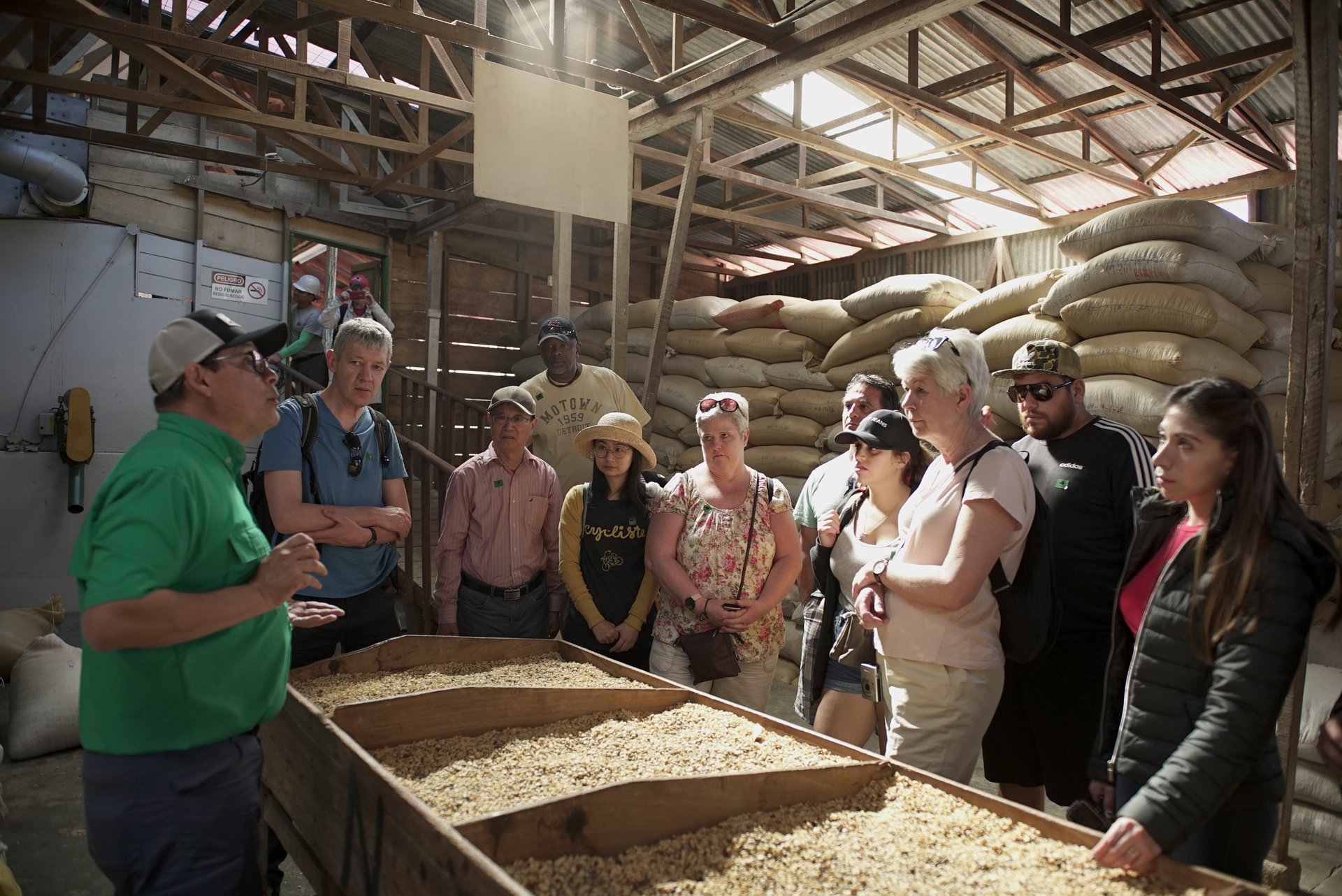
The Tarrazú region, situated in the Chiripó mountain range at elevations above 1,500 metres, is Costa Rica’s most celebrated coffee-growing zone. Tarrazú beans are prized by specialty roasters worldwide for their brightness, complexity, and clean finish. A guided visit to a working Tarrazú farm during harvest season (November through February) allows clients to follow the bean from tree to cup — picking ripe cherries, observing the wet-milling process, and tasting fresh-roasted coffee on site.

The Valle Central and Naranjo regions offer equally engaging experiences, with several farms now operating dedicated agrotourism programmes. Café Britt’s facility near Heredia has evolved into one of the country’s most visited cultural attractions, combining theatrical coffee-story presentations with cupping sessions and behind-the-scenes production tours. It is well-suited to clients who prefer a polished, interpretive experience over a purely agricultural one.

San José: More Than a Transit Hub

Most itineraries treat San José as an arrival/departure necessity rather than a destination in its own right. This is a missed opportunity. The capital has undergone significant cultural investment in recent years, and agents who include a purposeful San José day or overnight will find clients pleasantly surprised.

The Barrio Escalante neighbourhood has become Costa Rica’s culinary epicentre, with a concentration of restaurants, specialty coffee bars, and artisan food producers that rivals any Latin American capital. The Mercado Central — a working market dating from 1880 — offers an unscripted window into daily Tico life. The National Museum, housed in a former military fortress whose walls still bear bullet scars from the 1948 civil war that abolished the country’s army, tells Costa Rica’s history with clarity and pride.

For agent proposals, positioning one to two nights in San José at the beginning of a trip — rather than a rushed transfer — allows for proper acclimatisation, a city food tour, and a coffee experience before heading to more remote destinations. The Fleur de Lys and Grano de Oro boutique hotels are the longstanding favourites for culturally oriented travellers who want character over chain.

Indigenous Communities: Respectful, Meaningful Encounters

Costa Rica is home to eight recognised indigenous groups, and a small but growing number of community-led tourism initiatives offer travellers respectful, economically beneficial encounters with their cultures and traditions.

The Boruca of the southern Pacific zone are renowned for their balsa-wood mask-making tradition, rooted in a ceremonial festival (Juego de los Diablitos) that re-enacts the community’s resistance to Spanish conquest. Artisan cooperatives sell directly to visitors, and guided visits can be arranged to workshops where the carving and painting process is demonstrated. This is particularly well-suited to clients with an interest in folk art and craft.

The Maleku of the northern lowlands maintain one of the most accessible community tourism programmes, with guided visits to a traditional settlement near La Fortuna. Presentations cover language, cosmology, traditional medicine, and the community’s relationship with the surrounding wetland ecosystem. Given its proximity to Arenal Volcano, this integrates naturally into a standard northern itinerary.

Agents should note that indigenous tourism in Costa Rica is intentionally small-scale and community-controlled. Group sizes are typically limited, advance booking is essential, and the experience is designed for genuine cultural exchange rather than performance. This makes it most suitable for curious, respectful travellers rather than those seeking a tick-box activity.

Cartago and the Orosi Valley: Colonial Heritage

Costa Rica’s original colonial capital, Cartago, sits at the foot of the Irazú Volcano and rewards a half-day visit for historically minded clients. The Basílica de Nuestra Señora de los Ángeles — Costa Rica’s most important religious site — is a striking structure housing La Negrita, a small stone figure of the Virgin Mary that is the focus of an annual pilgrimage drawing hundreds of thousands of devotees each August.

The nearby Orosi Valley is one of Costa Rica’s most scenic and historically layered landscapes: colonial churches, coffee plantations, thermal pools, and cloud forest reserves compressed into a single half-day loop from Cartago. The Lankester Botanical Gardens, operated by the University of Costa Rica, are among the finest orchid collections in the Americas — an outstanding stop for botanically inclined clients.

Building a Cultural Itinerary

Cultural and coffee itineraries work best when they avoid trying to cover too much ground too quickly. A well-paced 8-night programme might include two nights in San José (food tour, market visit, city history), two nights in Tarrazú or Naranjo (coffee farm immersion), two nights near La Fortuna (Maleku community visit, volcano, hot springs), and two nights on the southern Pacific coast (Boruca artisans, Osa Peninsula ecology). This creates a narrative arc — urban, agricultural, indigenous, natural — that gives the trip genuine depth.

CRS Tours has established partnerships with the coffee estates, cultural guides, and community organisations that make these experiences happen. We handle the logistics so agents can promise their clients something genuinely different — and genuinely Costa Rican.

Wellness & Yoga Retreats in Costa Rica: An Agent’s Complete Guide

Costa Rica has become one of the world’s top wellness destinations. From Nosara’s internationally acclaimed yoga scene to the rainforest spa retreats of the Osa Peninsula, here is everything travel agents need to know to sell this booming niche with confidence.

Why Costa Rica Leads the Wellness Travel Market

Costa Rica

The country’s pura vida philosophy aligns naturally with wellness tourism — a slower pace, extraordinary biodiversity, clean air, and a culture that genuinely prioritises wellbeing over hustle. Costa Rica is consistently ranked among the happiest countries in the world, and travellers feel it the moment they arrive.

For agents, the wellness segment is also commercially attractive. Wellness clients typically book longer stays, spend more on accommodation, and are less price-sensitive than standard leisure travellers. They are also highly likely to return, often annually, making them excellent candidates for long-term client relationships.

Nosara: The Yoga Capital of Latin America

No destination in Costa Rica — arguably in all of Central America — has done more to define the global yoga travel market than Nosara on the Nicoya Peninsula. This remote Pacific community hosts dozens of yoga schools, teacher training programmes, and wellness retreats operating year-round, drawing practitioners from the United States, Europe, and beyond.

The Nosara Yoga Institute is one of the most established centres, offering internationally certified teacher training alongside drop-in classes. Boutique properties such as Harmony Hotel and Bodhi Tree Yoga Resort have built their entire brand identity around wellness, integrating yoga shalas, farm-to-table dining, and holistic therapies into their guest experience.

For agents, Nosara works best for clients who value authenticity over luxury — the destination is deliberately low-key, with no large resort chains. Access is via a small regional airport at Nosara (NOB) or a three-and-a-half-hour drive from Liberia (LIR). The dry season (December–April) is the most popular period, but the green season brings lower rates and a more intimate atmosphere.

Santa Teresa & Mal País: Surf-Meets-Wellness

On the southern tip of the Nicoya Peninsula, Santa Teresa has evolved from a sleepy surfing village into a sophisticated wellness hub that attracts an increasingly discerning international clientele. The combination of consistent Pacific swell, white sand beaches, and a thriving community of wellness practitioners makes it ideal for clients seeking an active yet restorative experience.

Florblanca Resort is the anchor luxury property, offering private villas, a full-service spa, and a programme of yoga and meditation classes set against jungle and ocean views. For mid-range clients, the area’s independent yoga studios and boutique guesthouses offer excellent value. Retreats here routinely combine morning yoga with afternoon surf lessons — a combination that is particularly popular with millennial and Gen-X travellers.

The Osa Peninsula: Deep Jungle Wellness

For clients seeking transformative, off-grid wellness experiences, the Osa Peninsula delivers something that few destinations anywhere in the world can match. Surrounded by Corcovado National Park — home to the highest biodiversity per square metre on the planet — retreats here use the jungle itself as a therapeutic environment.

Hacienda AltaGracia, an Auberge Resorts property, is the flagship luxury wellness destination on the Osa. The property operates its own wellness programme integrating local medicinal plant knowledge with contemporary therapeutic modalities. Guests can book multi-day wellness itineraries combining jungle hikes, equestrian therapy, private yoga sessions, and spa treatments. Given its remote location (accessible via charter flight to Puerto Jiménez), this property appeals to ultra-high-net-worth clients seeking genuine exclusivity.

Thermal Hot Springs: Wellness in the Cloud Forest

The volcanic arc running through Costa Rica’s Central Valley creates a secondary wellness corridor that agents should not overlook. Tabacón Thermal Resort & Spa near Arenal Volcano is the most celebrated property, built around natural hot springs heated geothermally and set within lush tropical gardens. Guests soak in a series of pools at varying temperatures, with the volcano framed dramatically above.

For agents, Arenal hot spring packages are particularly easy to sell because they combine well with adventure activities (zip-lining, white-water rafting on the Río Sarapiquí) and wildlife watching, making them suitable for mixed-group travel where not all clients are dedicated wellness seekers.

What to Look For When Booking Wellness Clients

Not all wellness travellers are the same. Before booking, establish whether your client is primarily seeking yoga and movement, spa and relaxation, nature immersion, digital detox, or a combination. This determines not just the property but also the location — a yoga-focused client belongs in Nosara; a relaxation-focused client may be happier at a hot-springs resort near Arenal.

Meal quality is consistently cited by wellness travellers as a top priority. Ask properties about their food philosophy: farm-to-table sourcing, plant-forward menus, and the ability to accommodate dietary requirements (gluten-free, vegan, raw) are all worth confirming before booking.

Finally, consider group size. Many wellness retreats in Costa Rica have deliberately limited capacities to preserve atmosphere. Small luxury retreat centres often operate at 10–20 guests maximum, so securing spaces well in advance — particularly for December through February peak season — is essential.

Why Partner with CRS Tours for Wellness Bookings

CRS Tours maintains established relationships with Costa Rica’s leading wellness properties, from intimate yoga retreat centres in Nosara to the luxury spa resorts of the Osa Peninsula. We handle all ground logistics — transfers, internal flights, add-on excursions — so agents can focus on the client relationship. Our team visits properties regularly to ensure our recommendations are based on direct, current knowledge rather than brochure copy.

Get in touch to discuss your clients’ wellness travel needs and let us build an itinerary that delivers genuine transformation — and genuine commission.