
Family Travel in Costa Rica: The Agent’s Complete Booking Guide
Costa Rica is one of the world’s most rewarding family destinations — but getting the details right matters. Mismatched accommodation, exhausting transfers, or age-inappropriate activities can undermine an otherwise beautiful itinerary. Here is what travel agents need to know about destinations, properties, activities, and pacing to deliver a seamless family trip that generates referrals.
Why Costa Rica Works for Families
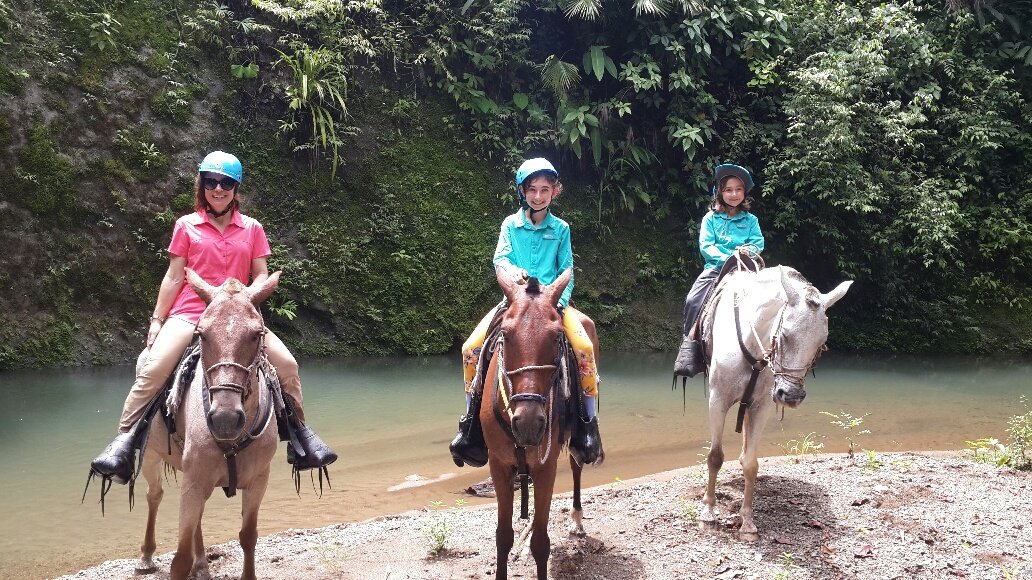
Few countries match Costa Rica’s ability to engage children of all ages. The country’s extraordinary wildlife — sloths, toucans, howler monkeys, sea turtles — creates a sense of wonder that no theme park can replicate. Activities are genuinely participatory: children do not watch wildlife, they encounter it. They do not observe coffee production, they pick the beans. The country’s compact geography also means that multiple ecosystems — rainforest, volcano, beach — are accessible within a single week, preventing the itinerary fatigue that can affect longer, single-environment trips.
For agents, family travel to Costa Rica also represents a commercially strong segment. Family groups book larger rooms or multiple units, add more excursions, and often upgrade accommodation to ensure children’s comfort. A well-executed family trip generates loyalty and referrals that extend well beyond the individual booking.
Best Destinations for Families
Arenal Volcano & La Fortuna is consistently the top-performing family destination in Costa Rica. The combination of a visually dramatic active volcano, accessible wildlife, white-water rafting, zip-lining, chocolate farm tours, and natural hot springs creates an itinerary that satisfies every age group simultaneously. The infrastructure around La Fortuna is well developed, transfers are straightforward, and accommodation ranges from family suites at Nayara Hotels to self-contained villas ideal for larger groups.
Manuel Antonio on the central Pacific coast is the other anchor family destination. The national park — one of the world’s smallest, one of the world’s most biodiverse — is genuinely accessible to children, with well-maintained trails, white-sand beaches within the park boundary, and a concentration of wildlife including white-faced capuchin monkeys, sloths, and iguanas that virtually guarantees sightings on any visit. The town of Quepos offers a wider range of accommodation options than more remote destinations, and the proximity to the airport at Quepos reduces transfer times from San José.
Tortuguero National Park, accessible only by boat or small aircraft, offers an experience unlike any other. Canoe tours through jungle canals at dawn, extraordinary bird life, and — in season (July through October) — the extraordinary spectacle of green sea turtles nesting on the beach create memories that children carry for life. The remoteness makes it slightly more demanding logistically, but for adventurous families with children aged 8 and above, it is outstanding.
Guanacaste, with its Pacific beaches and established resort infrastructure, is the right choice for families seeking more beach time alongside wildlife encounters. The Four Seasons Resort at Peninsula Papagayo operates one of the best kids’ clubs in the region, and the dry Pacific climate (December through April) guarantees reliable beach weather.
Accommodation: What Matters for Families
Interconnecting rooms, family suites, or private villas are strongly preferable to standard double rooms. Establish early in the booking process whether the family wants one shared space or separate rooms for parents and children — different families have very different expectations on this point.
Lodge-style properties with open-air common areas, wildlife feeders, and gardens that children can freely explore during free time are often more successful than resort-style hotels with a poolside focus. El Silencio Lodge in the Bajos del Toro cloud forest, Tulemar Bungalows in Manuel Antonio, and Leaves & Lizards Arenal Volcano Cabin Retreat are all exemplars of properties where the environment itself entertains children throughout the day.
Swimming pools remain important, particularly for evenings and rest days. Most lodge-style properties have them, but it is worth confirming pool size and depth for families with young children.
Activities by Age Group
For children aged 4–7, the best experiences are short (under two hours), sensory, and guided by specialists who understand young attention spans. Chocolate farm visits, butterfly gardens, frog ponds, and sloth sanctuary tours fit this profile well. Wildlife walks with a skilled naturalist guide — who knows how to keep small children engaged and quiet at the right moments — are reliably successful.
Children aged 8–12 can access a much wider range of Costa Rica’s signature experiences. White-water rafting on the Río Sarapiquí (Class II–III), beginner surf lessons in Manuel Antonio or Tamarindo, zip-lining at mid-length platforms, and kayaking in calm estuaries are all appropriate and typically unforgettable.
Teenagers respond best to more immersive, physically engaging experiences: challenging zip-line circuits, introductory surfing at consistent beach breaks, overnight camping in a national park, and snorkelling or diving off the Pacific coast. Many teenagers who are initially unenthusiastic about a family Costa Rica trip become its most passionate advocates by day three.
Pacing: The Most Common Booking Mistake
Agents consistently underestimate how much transfer time affects family trips in Costa Rica. A move that takes two hours without stops can become three-and-a-half hours with a family, and arriving at a lodge after dark eliminates the first evening’s wildlife experience. Build in buffer time at every stage, keep moving days to a maximum of three or four per week, and resist the temptation to cover too many destinations — depth beats breadth for families.
A well-designed 10-night family itinerary might look like: two nights Arenal (arrival, acclimatisation, waterfall hike, hot springs), two nights Tortuguero or Sarapiquí (jungle canals, wildlife), one night San José (city break, pre-departure), returning to Guanacaste or Manuel Antonio for four nights of beach and relaxation before departure. This gives a natural energy arc — active in the middle, restorative at the end — that works for the whole family.
CRS Tours and Family Travel
We specialise in building family itineraries that go beyond the standard template. Our on-the-ground team knows which naturalist guides genuinely connect with children, which lodges have the best environmental education programmes, and which transfers to pre-book early in high season. Family travel is one of our strongest segments — contact us to design an itinerary your clients will be talking about for years.